Talk with people, not at them.
Nobody wants to be sold. Help them think.
Sell more. Earn more. Without sounding like a sleazy salesperson.
You’ve got the conversations. This is the language that makes them work.
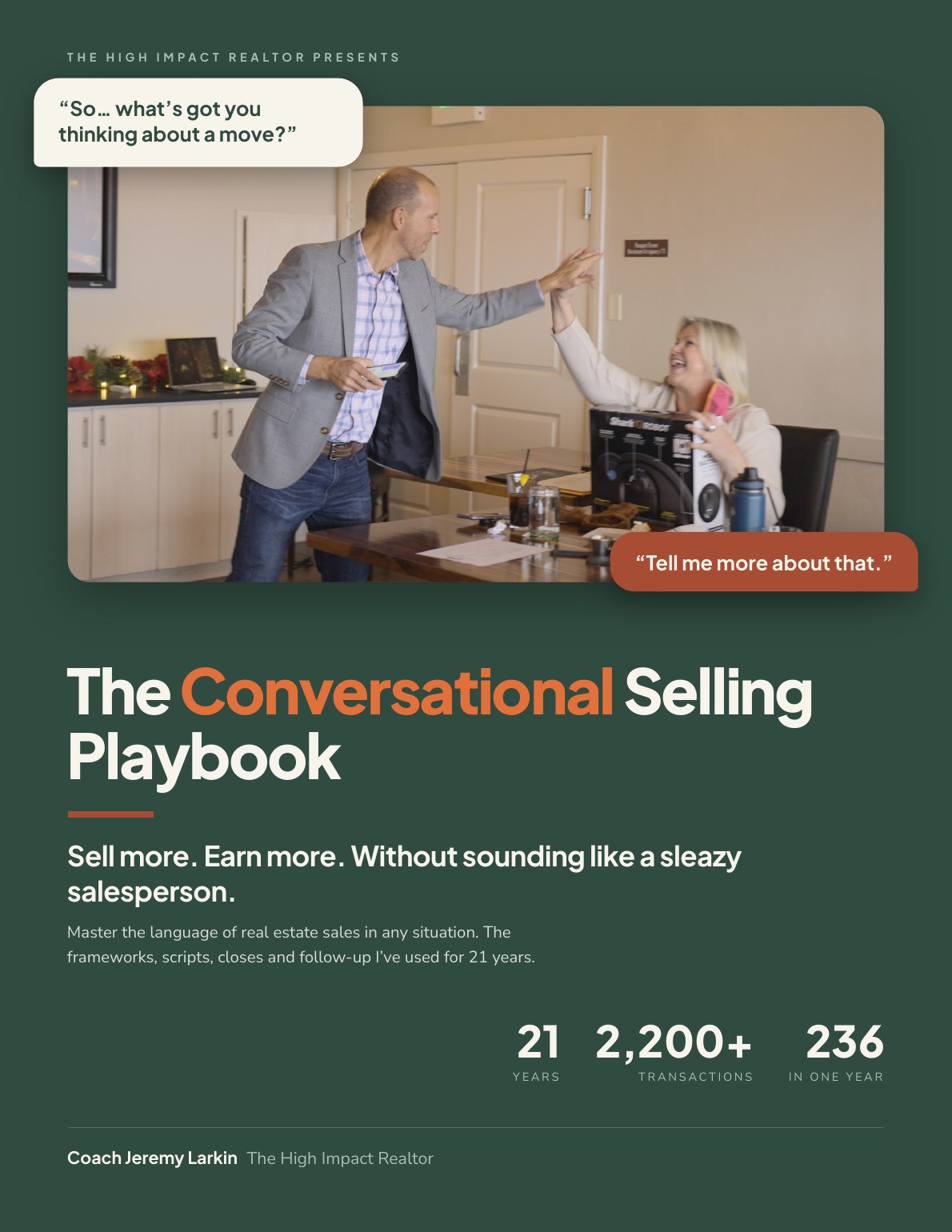
What to say, how to say it, and the confidence to say it.
Get the Playbook,These aren’t just some random scripts. These are the actual language patterns and frameworks I’ve used to produce over 2,200 sales over 21 years.
When you learn not only what to say, but how to say it, you’ll convert leads with more ease, set more appointments, and ultimately earn more money.
If I knew what to say, and how to say it, in any real estate situation, everything got easier.
You ask great questions, listen for what really matters to them, and guide them toward a good decision. It’s so natural and relaxed that it never feels like a pitch.
And here’s the part most agents miss. It’s deeply respectful. You’re not trying to trap anyone or win an argument. You’re helping someone think clearly about one of the biggest decisions of their life.
Collaborative, not combative. Contribution, not extraction.
Sit next to people at the table, metaphorically, and work the problem together.
Nobody wants to be sold. Help them think.
When you know what to say, your personality finally has room to show up.
The moment you’re trying to win, you’ve already lost the conversation.
Opener, rapport, motivation, objections, commitment. Know which one you’re in and what comes next.
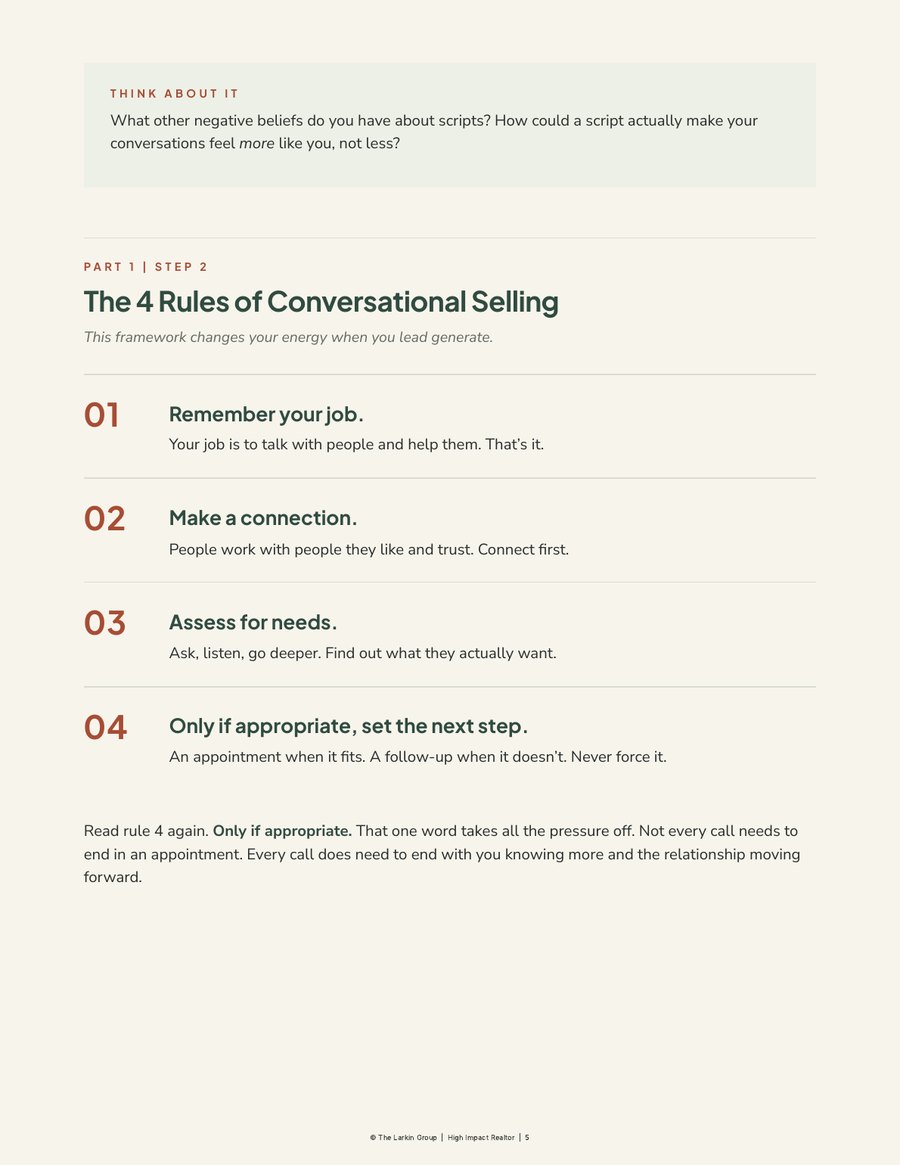
Why scripts matter. The 4 Rules of Conversational Selling.
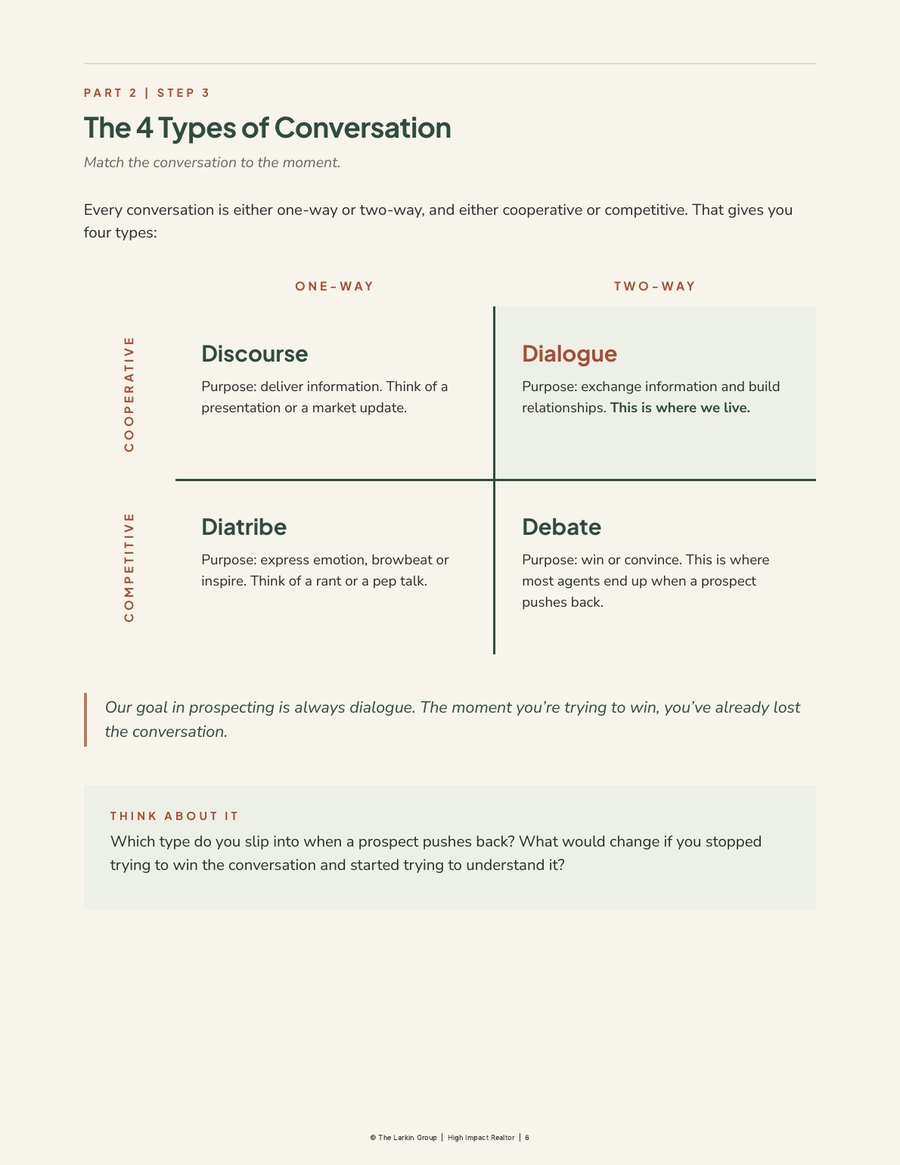
The 4 types of conversation. The 5 Laws of Dialogue. Conversational bridges.
The Universal Appointment Setting Script. 6 Belief-Breaker Language Patterns. 10 Classic Closes. 8 Follow-Up Texts.
10 steps to overcoming call reluctance. Making it stick, with a 30-day practice plan.
Door Knocking and Circle Prospecting. Open House. Seller Pre-Qualification. Buyer Pre-Qualification (LPMAMA).
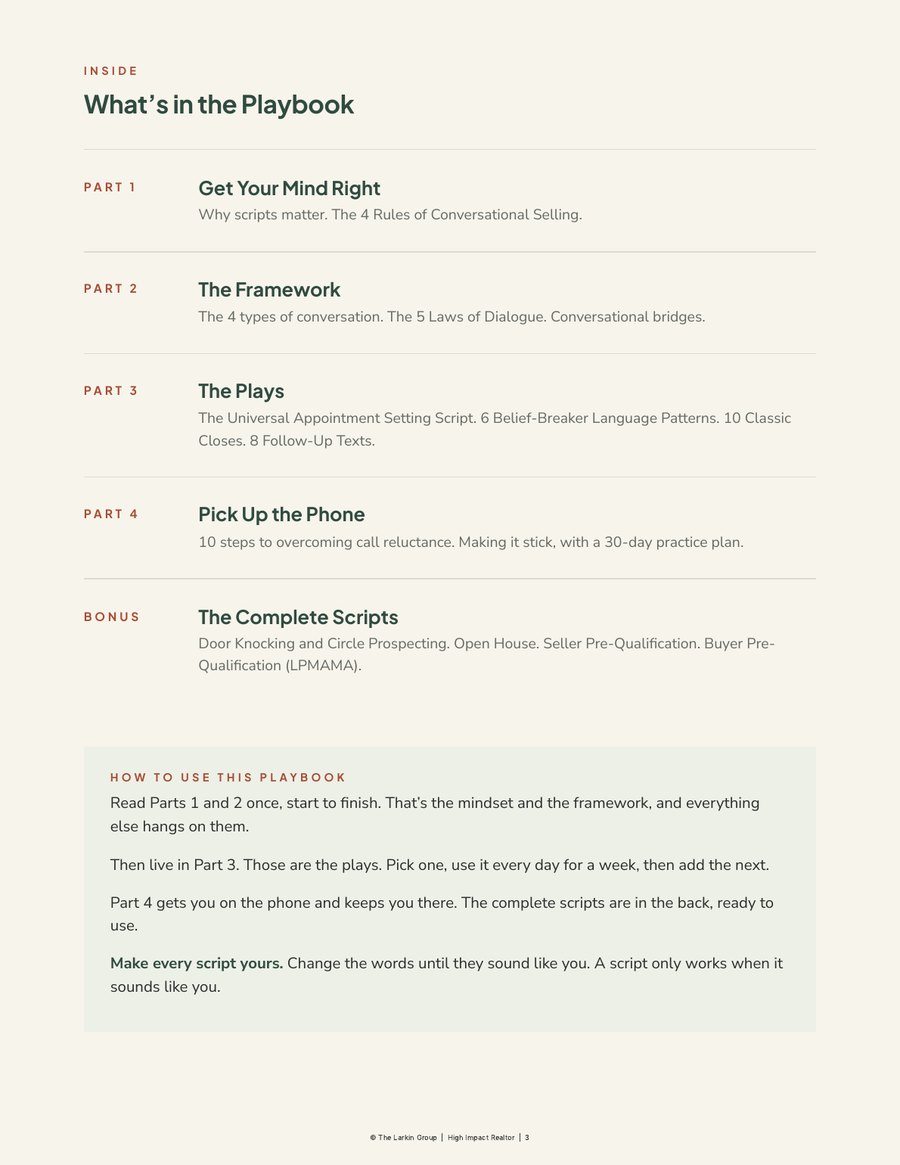
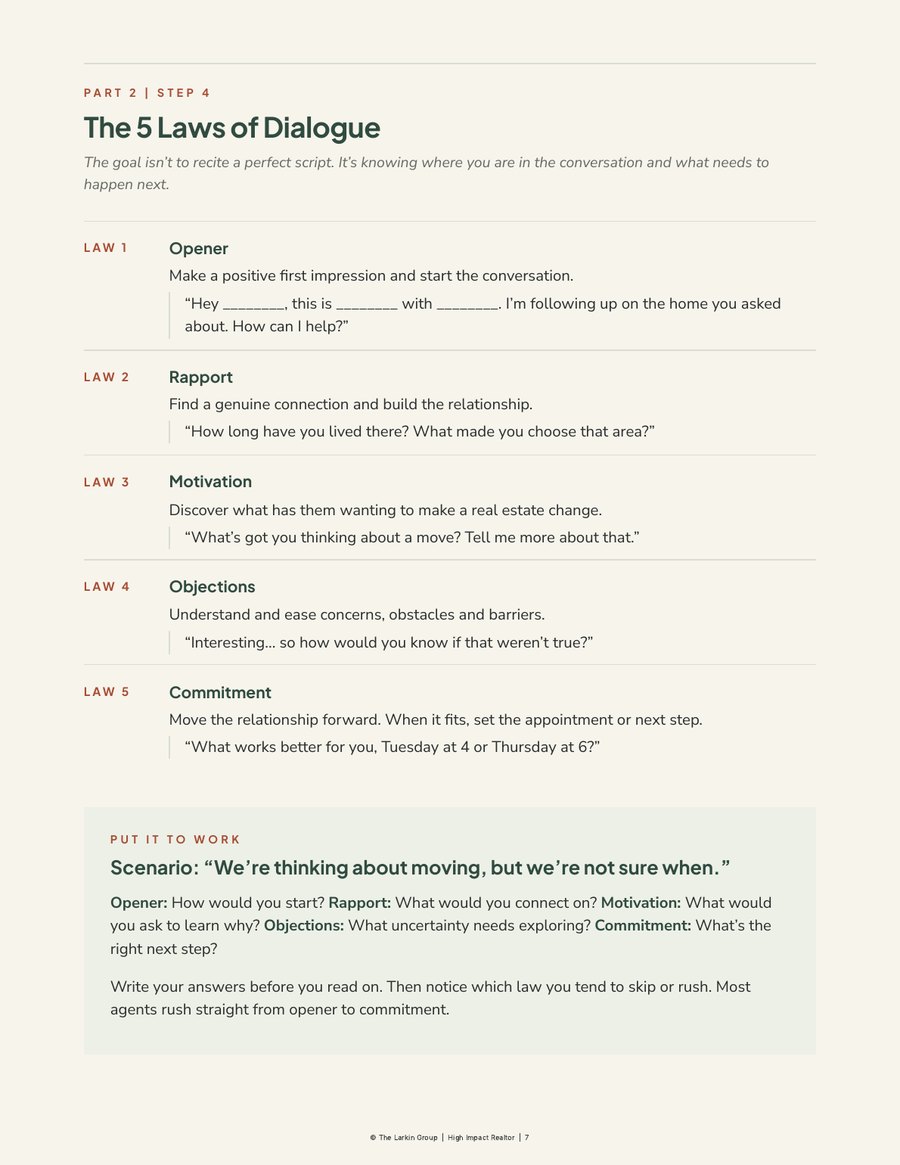
Read Parts 1 and 2 once, start to finish. That’s the mindset and the framework, and everything else hangs on them.
Then live in Part 3. Those are the plays. Pick one, use it every day for a week, then add the next.
Part 4 gets you on the phone and keeps you there. The complete scripts are in the back, ready to use.
Make every script yours. Change the words until they sound like you. A script only works when it sounds like you.
When I got into this business 21 years and over 2,200 transactions ago, I stumbled onto a secret.
If I knew what to say, and how to say it, in any real estate situation, everything got easier.
Lead generation. Follow-up. Appointments. Objections. All of it went from scary to fun. It became a game, and the game paid.
I closed 6 homes in my first 6 months in the business. 20 in year two. 46 in year five.
And for the last 15 years, my team and I have averaged over 150 transactions a year, including 236 in our biggest year.
That’s because of what I’m going to teach you in this Playbook. I’m handing you the keys: the frameworks, the scripts, the closes and the follow-up.
Here’s the truth: sales doesn’t have to be hard, and it doesn’t have to be sleazy. It can actually be fun.
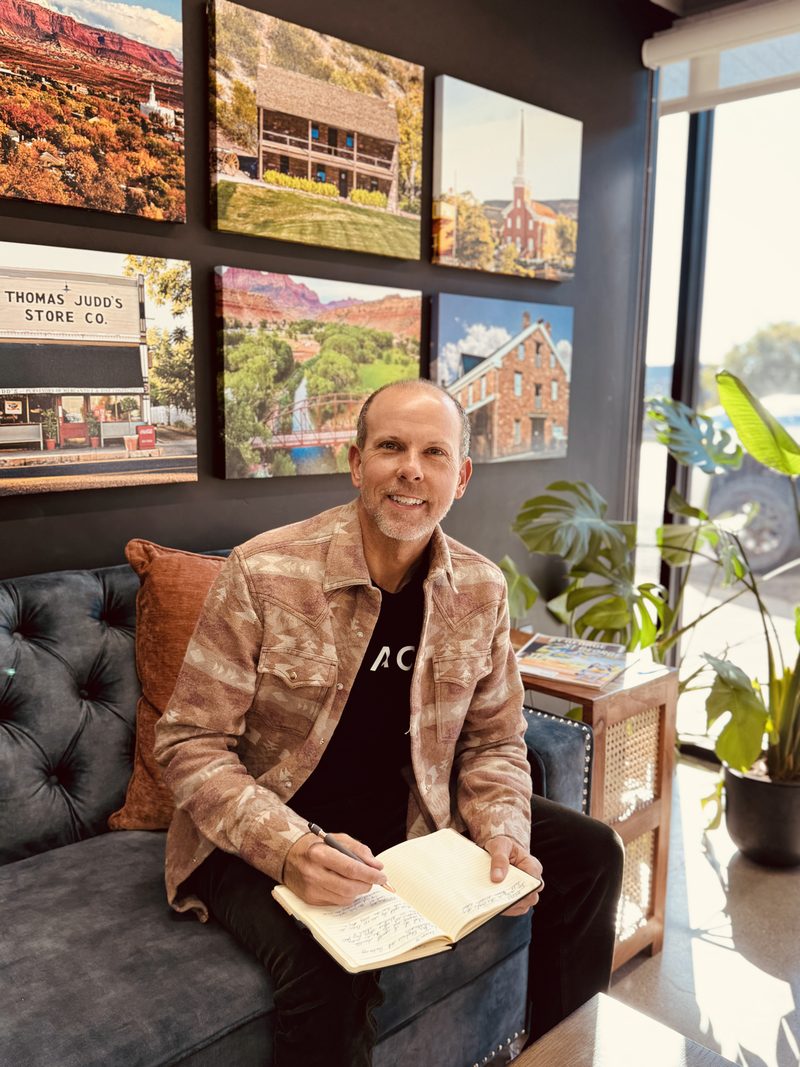
I’ve sold real estate in St. George, Utah for 21 years. I’ve been part of about 2,200 home sales, I lead The Larkin Group, I still sell my own deals, and I host The Real Estate Morning Drive radio show.
I coach producing agents on the conversations that create consistent closings. This Playbook is the language I’ve used across those years: what to say, how to say it, and the confidence to say it.
Instant PDF download. 36 pages.
A 36-page PDF you can download right after you check out.
Any agent who talks to people for a living, brand new or 20 years in. Scripts keep any agent organized and consistent. The pros practice the most.
No. It’s what to say, how to say it, and the confidence to actually say it. Parts 1 and 2 are the mindset and the framework. Part 3 is the plays. Part 4 gets you on the phone. The complete scripts are in the back, ready to use, and they only work when they sound like you.
Read Parts 1 and 2 once, start to finish. Then live in Part 3. Pick one play, use it every day for a week, then add the next. Change the words until they sound like you.